


Converting Garage into Living Space: A Contra Costa County Homeowner’s Guide (2026)

What if the most valuable square footage in your Alameda County home is currently being used to store dusty cardboard boxes and a lawnmower? You likely feel the daily constraint of a home office that's actually a kitchen table or a guest room that doesn't exist. In 2026, the demand for functional square footage in the Bay Area has reached a new peak. Converting garage into living space offers a sophisticated alternative that maximizes your current footprint with precision and craftsmanship.
We understand that permit delays and zoning confusion in Alameda County often create unnecessary anxiety for homeowners. This guide provides a professional roadmap to transforming your underutilized garage into a high-value, code-compliant living space. We'll walk you through our bespoke construction process, from initial design to the final structural inspection, ensuring your project adds legal square footage and measurable property value. You'll gain a clear understanding of the distinction between a simple room conversion and a legal ADU. Our end-to-end solutions at Pro-Construction provide the transparency you need for a seamless home expansion that stays on-time and on-budget.
Key Takeaways
Evaluate your structure’s health and navigate parking requirements to ensure your project aligns with Contra Costa County’s specific regulations.
Understand the critical Title 24 energy standards and vapor barrier requirements for successfully converting garage into living space.
Compare the scope and utility of a Guest Suite versus an ADU to determine which conversion path maximizes your property’s value.
Master our professional five-step roadmap to navigate the complexities of design, engineering, and local building department approvals.
Learn how an end-to-end partnership provides the transparency and craftsmanship needed for a seamless, high-value home transformation.
Table of Contents Assessing Your Garage for Living Space Conversion in Contra Costa County Structural and Code Requirements: Navigating Title 24 and Local Standards Choosing Your Conversion Path: Guest Suite vs. Accessory Dwelling Unit (ADU) The Professional Roadmap: 5 Steps to a Seamless Living Space Transformation Partnering with Pro-Construction: Excellence in Bay Area Garage Remodeling
Assessing Your Garage for Living Space Conversion in Contra Costa County
Transforming an underutilized garage into a functional part of your home is a sophisticated undertaking that requires meticulous planning. We view this process as a strategic partnership between our expertise and your vision. Before the first hammer swings, we must determine if your existing structure supports a high-end transformation. Converting garage into living space offers a unique opportunity to increase your home's value, but success depends on a disciplined assessment of the current foundation and local legal constraints. We prioritize transparency during this phase to ensure your project remains on-time and on-budget.
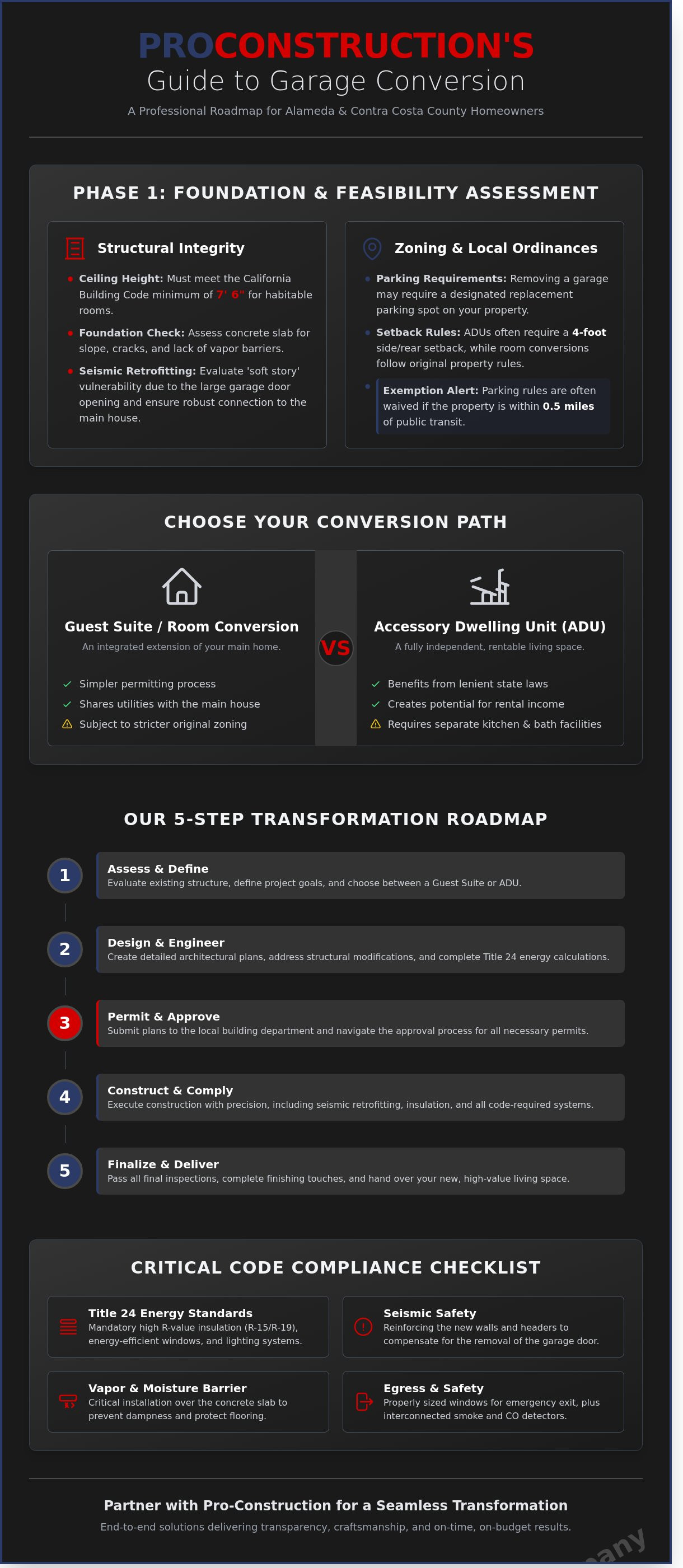
Defining your primary goal is the first step toward excellence. You must decide if the space will serve as a bespoke guest suite, a quiet home office, or a fully independent Accessory Dwelling Unit (ADU). Each path involves different building codes and utility requirements. In Contra Costa County, the distinction between a simple room addition and an ADU is significant; the latter requires independent kitchen and bathroom facilities but often benefits from more lenient state-level zoning protections.
Structural Integrity and Foundation Checks
We begin by evaluating the concrete slab, as most garage floors are sloped for drainage and lack the vapor barriers found in primary living areas. We look for moisture intrusion or seismic cracks that could compromise the integrity of your new flooring. Our team also verifies the following technical requirements:
Ceiling Height: California Building Code requires a minimum of 7 feet 6 inches for habitable rooms. If your rafters are too low, we must explore structural modifications.
Load-Bearing Walls: We assess if the existing framing can support the added weight of insulation, drywall, and potential second-story additions.
Seismic Retrofitting: Given our proximity to the Hayward and Calaveras faults, we ensure the garage-to-house connection meets modern safety standards.
Zoning and Local Ordinance Awareness
Navigating the specific mandates of cities like Walnut Creek or Concord requires a professional touch. While converting garage into living space is more accessible than ever due to recent state legislation, local setbacks still dictate your design. Most municipalities require a 4-foot side and rear setback for ADUs, but a standard room conversion may be subject to stricter original property line rules. We meticulously review these details to avoid costly mid-project corrections.
Parking remains a critical variable. In many Concord neighborhoods, removing a garage space might require you to designate a "replacement" off-street parking spot on your driveway. However, if your property is within a half-mile of public transit, these requirements are often waived under California Government Code 65852.2. We provide a seamless management experience by coordinating with local planning departments to confirm these exemptions early in the process.
Structural and Code Requirements: Navigating Title 24 and Local Standards
Converting a garage into living space requires a disciplined approach to California’s rigorous building codes. We don't view these regulations as hurdles; we see them as the blueprint for your safety and long-term comfort. A primary challenge involves the existing concrete slab. Most garage floors lack the vapor barriers found in standard residential foundations. We install professional moisture barriers and thermal breaks to prevent ground dampness from migrating through the concrete and ruining your new flooring. We also address the "soft story" vulnerability common in garages. Because the large opening for a vehicle door weakens the overall structure, we often implement seismic retrofitting to ensure the room withstands lateral forces during an earthquake.
The Importance of Title 24 Compliance
We strictly follow the Title 24 Building Energy Efficiency Standards to ensure your renovation is environmentally responsible and cost-effective. When we replace a garage door with a permanent wall, we calculate the specific R-value needed for the assembly. This usually requires R-15 or R-19 insulation to match the thermal performance of the rest of the home. Lighting must meet JA8 high-efficacy standards. This means we utilize dedicated LED fixtures rather than simple screw-in bulbs to reduce energy consumption. In the East Bay’s varied climate, we also evaluate attic ventilation. Proper airflow or the installation of cool roof materials helps maintain a steady internal temperature throughout the year.
Fire Safety and Egress Standards
Your safety is the foundation of our craftsmanship. If the new room shares a wall with the main house, we install 5/8-inch Type X fire-rated drywall to meet strict separation requirements. Egress is another non-negotiable factor. For any space intended for sleeping, we install windows with a minimum clear opening of 5.7 square feet. The sill height must remain 44 inches or less from the floor to allow for a safe exit during an emergency. We also integrate a hardwired network of smoke and carbon monoxide detectors that communicate with the existing house alarms. Our team manages every detail of this comprehensive conversion process to ensure your project remains on-time and on-budget.
Choosing Your Conversion Path: Guest Suite vs. Accessory Dwelling Unit (ADU)
Deciding between a guest suite and a full Accessory Dwelling Unit (ADU) is the most critical choice you'll make when converting garage into living space. This decision dictates your project's architectural scope, total investment, and long-term property utility. We prioritize transparency from the start, helping you weigh the immediate construction costs against the potential for future equity or rental revenue. Each path requires a different approach to utility integration and municipal compliance.
Your choice significantly impacts your property's tax profile and utility load. A guest suite generally remains tied to the primary home's tax assessment as an improvement. In contrast, an ADU may trigger a more complex reassessment of the converted square footage. We guide you through these financial nuances to ensure your project remains a sound investment. Our team focuses on delivering a seamless transition that aligns with your specific lifestyle needs and financial goals.
The Habitable Room Extension
This approach is the most efficient way to expand your home's footprint without the complexity of independent living requirements. It's an ideal solution for professionals needing a quiet home office, families wanting a dedicated media room, or fitness enthusiasts requiring a climate-controlled gym. These spaces typically share the main house's HVAC system and electrical circuits. Because the room doesn't function as a separate residence, permit fees are lower and the approval process is often shorter. It's important to remember that these extensions cannot be rented as independent units because they lack dedicated kitchens and separate entrances.
The Independent ADU Transformation
If you seek multi-generational living options or a consistent stream of rental income, the ADU path is superior. This transformation requires the installation of a full kitchen and a private bathroom, making the unit entirely self-sufficient. This level of independence involves technical challenges, such as plumbing trenching through existing slabs and the installation of separate utility meters. Our team manages these complexities with disciplined project management, ensuring every connection meets strict 2024 building codes. We bring deep Accessory Dwelling Units (ADUs) expertise to the table, handling everything from initial site prep to final occupancy permits. This comprehensive service model ensures your converting garage into living space project is delivered on-time and on-budget. We treat this process as a partnership, focused on creating a bespoke living environment that adds significant value to your estate.
The Professional Roadmap: 5 Steps to a Seamless Living Space Transformation
Converting garage into living space requires a disciplined methodology to ensure the new room feels like a natural extension of your home. We utilize a structured five phase roadmap designed to mitigate risks and deliver architectural excellence. This process moves from conceptual engineering to the final bespoke details that define a high-end renovation.
Phase 1: Design and Engineering. We create blueprints specifically tailored to pass Contra Costa County review, focusing on structural integrity and spatial flow.
Phase 2: Permitting and Approval. We manage the local building department bureaucracy, handling the "Plan Check" process to secure all necessary legal authorizations.
Phase 3: Structural Envelope. Our team seals the concrete slab against moisture, insulates walls to meet energy codes, and replaces the garage door with a permanent, insulated exterior wall.
Phase 4: Systems Integration. We execute professional installs for electrical sub-panels, plumbing extensions, and high-efficiency HVAC mini-split systems.
Phase 5: Bespoke Finishes. We apply the final touches, including premium flooring, flawless drywall, and custom cabinetry for a high-end aesthetic.
Phase 1 & 2: The Planning Foundation
Success begins with a site plan that accounts for drainage and utility proximity. We prioritize professional engineering because it's vital for Bay Area seismic safety. The California Building Standards Code (Title 24) requires specific lateral bracing and foundation anchors to protect your home during seismic events. We submit these detailed drawings for "Plan Check" and address city-specific corrections immediately. This proactive management prevents delays and ensures the project remains on a predictable schedule.
Phase 3 & 4: The Build and Systems
The transition from a utility space to a comfortable room involves complex infrastructure. If you are adding a guest suite or a Bay Area bathroom remodel, we perform precise trenching for new sewer and water lines. We also install a dedicated electrical sub-panel. This ensures your new living area can handle modern power demands without overtaxing your home's existing circuits. Our "no-surprises" philosophy means we inspect every inch of the structure when opening existing walls. We identify and resolve hidden issues, such as outdated wiring or moisture damage, before they can impact the budget or timeline.
We maintain a steady, deliberate pace throughout the build to ensure every component meets our standards for craftsmanship. This meticulous approach transforms a cold, concrete garage into a climate-controlled, energy-efficient environment. By the time we reach the finishing stage, the structural and mechanical bones of the room are prepared for decades of reliable use.
Ready to begin your renovation?
for a transparent and expertly managed garage conversion.
Partnering with Pro-Construction: Excellence in Bay Area Garage Remodeling
We've spent over 23 years refining our craft within the Contra Costa County community. Our end-to-end solution handles everything from the initial permit acquisition to the final walkthrough, so you don't have to manage multiple subcontractors. We take full responsibility for the project's success. This proactive management style ensures that converting garage into living space remains a rewarding experience rather than a logistical burden. Our team treats every home as a testament to our dedication to quality.
Transparency isn't just a buzzword for our team; it's the foundation of our business model. We utilize a disciplined project management system to keep every renovation on-time and on-budget. We focus on architectural continuity so your new living area blends seamlessly with your home's existing aesthetic. By matching floor levels, exterior siding, and interior trim, we create a space that looks original to the house. This meticulous attention to detail ensures the conversion enhances your property's value and utility.
The Pro-Construction Difference
We assign a dedicated supervisor to your project to maintain order and provide constant updates. This professional oversight ensures that every artisan on-site adheres to our high standards for craftsmanship and integrity. We source only high-quality materials to guarantee lasting durability and bespoke elegance. Our history of managing complex home renovations in the East Bay allows us to anticipate challenges before they arise. We believe that your peace of mind is just as important as the physical build itself.
Start Your Transformation Today
Scheduling a professional site assessment is the first step toward your new guest suite, home office, or gym. During this consultation, we'll examine the structural integrity of your garage and discuss your specific vision for converting garage into living space. We provide a clear, structured explanation of the timeline and requirements. Our commitment to meticulous detail ensures that every square foot meets your expectations. We're ready to show you how a disciplined partnership can transform your home with precision and excellence.
Transform Your Contra Costa Property Today
Successfully converting garage into living space requires a meticulous approach to California’s 2026 building standards and local Title 24 energy requirements. You've learned how to distinguish between a simple guest suite and a formal Accessory Dwelling Unit while navigating the essential five-step roadmap for a seamless transformation. This process demands more than basic construction; it requires a disciplined partner who understands the nuances of Contra Costa County permits and structural engineering.
Pro-Construction delivers peace of mind through 23+ years of Bay Area expertise and a commitment to absolute transparency. We manage your project from the initial assessment to the final inspection, utilizing a fixed-price contract to eliminate financial uncertainty. Our comprehensive end-to-end project management ensures your vision is realized with the highest level of craftsmanship and professional oversight. We don't just build rooms; we create bespoke environments that enhance your home's value and utility.
Schedule your Contra Costa County garage conversion consultation with Pro-Construction to begin your journey toward an elite living space. We're ready to bring our signature excellence to your next home investment.
Frequently Asked Questions
Do I need a permit to convert my garage into a living space in Contra Costa County?
Yes, you must obtain a building permit from the Contra Costa County Building Inspection Division before starting any construction work. This legal requirement ensures your project complies with the 2022 California Building Code for structural safety and fire protection. We manage this entire permitting phase to provide a seamless experience, ensuring your renovation meets all local zoning laws and energy standards without unnecessary delays or legal complications.
How much does a garage conversion cost in the Bay Area?
Project costs fluctuate based on square footage and material choices, but 2023 industry data from sources like Houzz indicate that high-end conversions in Northern California often start at 150 dollars per square foot. We prioritize transparency in our bidding process to ensure your project remains on-budget. Our team provides detailed cost breakdowns during the initial consultation to protect your investment and eliminate the anxiety of financial surprises.
Will converting my garage into a room decrease my home's resale value?
Converting garage into living space typically increases home value, especially in high-density areas where square footage is at a premium. Data from the National Association of Realtors in 2022 suggests that adding habitable square footage can offer a return on investment of up to 70 percent. We view every project as a partnership, focusing on bespoke designs that maintain your home's curb appeal while maximizing the functional utility of the new room.
How do I heat and cool a converted garage living space?
Installing a ductless mini-split system is the most efficient method for climate control in these specialized rooms. These units offer independent temperature management and don't require you to modify your existing HVAC ductwork. Our technicians ensure a seamless installation that provides year-round comfort. This approach maintains high standards of excellence while meeting the specific insulation requirements mandated by the 2022 California Energy Code.
Can I add a bathroom to my garage conversion?
You can certainly add a full or half bathroom, provided the design accommodates the 1/4 inch per foot slope required for drainage pipes. We handle the complex plumbing integration and ensure all fixtures meet the 2022 California Green Building Standards Code for water efficiency. This addition transforms the space into a true suite, significantly enhancing the versatility and luxury of your home's new footprint through our end-to-end solutions.
What is the difference between a garage conversion and an ADU?
A garage conversion results in a new room integrated into the main house, whereas an Accessory Dwelling Unit is a self-contained residence with its own kitchen and entrance. ADUs must follow specific state laws like SB 9 which allow for independent living quarters on a single-family lot. We offer bespoke guidance for both options, helping you decide which structure best serves your long-term goals and property constraints with total transparency.
How long does the professional garage conversion process take?
The entire process generally spans 12 to 18 weeks from the first design meeting to the final walkthrough. This timeline includes approximately 4 weeks for architectural planning and 8 to 12 weeks for the physical construction phase. We utilize a disciplined project management schedule to ensure on-time delivery. Our team maintains constant communication throughout these months to keep you informed of every milestone achieved during the transformation.
What are the ceiling height requirements for a habitable garage room?
The 2022 California Residential Code requires a minimum ceiling height of 7 feet for any space intended for human habitation. If your current garage rafters sit lower than this mark, we must modify the roof structure or lower the floor slab to achieve compliance. We approach these structural challenges with meticulous craftsmanship, ensuring your new living space feels open, airy, and fully compliant with all safety mandates and building regulations.


Comments