


Refacing Versus Replacing Cabinets Explained

A kitchen can look dated because of worn doors, faded finishes, poor storage, or a layout that no longer works for the household. When weighing refacing versus replacing cabinets, the key question is not simply which option costs less. It is whether the existing cabinet boxes, kitchen layout, and underlying conditions are worth preserving.
For Bay Area homeowners and property owners, that decision can affect the project schedule, the scope of plumbing and electrical work, permit needs, and the long-term value of the kitchen. A careful inspection before construction begins helps prevent a cosmetic update from covering up a problem that should have been corrected.
What Cabinet Refacing Includes
Cabinet refacing keeps the existing cabinet boxes in place while changing the visible exterior surfaces. The contractor removes the doors and drawer fronts, applies a new finish material to the cabinet faces and exposed sides, then installs new doors, drawer fronts, hardware, and often new hinges.
The result can significantly change the appearance of a kitchen without removing every cabinet. Homeowners may choose shaker-style doors, updated hardware, a different wood tone, or a painted finish that better fits the rest of the home. Refacing can also be paired with new countertops, a backsplash, lighting, flooring, and paint for a more complete kitchen refresh.
However, refacing is not the same as repairing or rebuilding cabinet boxes. The original boxes remain, so their condition matters. The boxes should be structurally sound, securely attached, reasonably level, and free from significant water damage, mold, pest damage, or delamination.
When Refacing Is a Practical Choice
Refacing is often a good fit when the kitchen layout already works. If appliances are in the right locations, the work triangle is functional, and the cabinet sizes provide enough storage, there may be no reason to remove usable boxes simply for a new appearance.
It can also make sense when a homeowner wants less demolition and a shorter construction period. Since existing cabinets stay in place, refacing usually creates less disruption than a full cabinet replacement. That can be especially helpful in occupied homes, rental properties, or commercial spaces where downtime needs to be managed carefully.
Refacing is most successful when it is treated as one part of a planned remodel, not as a shortcut around known issues. If the sink base has been repeatedly exposed to leaks or the wall behind the cabinets needs repair, those conditions should be addressed before new finishes are installed.
When Replacing Cabinets Is the Better Investment
Cabinet replacement involves removing the existing cabinets and installing new cabinet boxes, doors, drawers, and hardware. It is the more extensive option, but it provides far greater freedom to change how the kitchen works.
Replacement is generally the stronger choice when the existing cabinets are damaged, poorly built, undersized, or no longer suited to the home. Particleboard boxes that have swollen from moisture, sagging shelves, failing drawer systems, and cabinets that are pulling away from walls are all signs that refacing may not be a wise long-term investment.
A full replacement also makes sense when the layout needs to change. Moving a refrigerator, adding an island, widening a walkway, relocating a sink, or improving access to storage can require new cabinetry and coordinated trade work. In older Bay Area homes, opening walls or updating kitchen placement may also reveal electrical, plumbing, drywall, and flooring work that should be included in the project plan.
More Options for Storage and Function
New cabinets allow homeowners to select sizes and features that solve daily frustrations. Deep drawers can replace difficult lower cabinets. A pull-out trash cabinet can improve cleanup. Tall pantry storage, corner solutions, appliance garages, and properly sized cabinets around a new range or refrigerator can make a kitchen easier to use every day.
Replacement also gives the project team a cleaner opportunity to correct uneven walls, improve cabinet alignment, and coordinate new countertops and backsplash installation. In some kitchens, the difference between preserving an old layout and rebuilding it thoughtfully is the difference between a surface-level update and a true improvement in function.
That said, new cabinets are not automatically the right answer. Replacing solid, well-built cabinetry solely because the door style feels outdated can add unnecessary cost and construction time. The best choice depends on the condition of what is already there and what the household needs from the room.
Refacing Versus Replacing Cabinets: Cost and Schedule
Refacing generally costs less than replacing cabinets because it uses the existing cabinet boxes and involves less demolition, disposal, and installation labor. But the savings are not always as large as homeowners expect. High-quality doors, finish materials, custom modifications, premium hardware, and countertop work can bring a refacing project closer to the cost of entry-level new cabinets.
Replacement has a broader cost range. Stock cabinets may be appropriate for a straightforward kitchen, while semi-custom or custom cabinetry can better address unusual room dimensions, older-home conditions, and specific storage needs. The cabinet price is only one part of the budget. Removal, wall repairs, flooring patches, countertop fabrication, plumbing reconnection, electrical upgrades, and finish work must also be considered.
Schedule follows a similar pattern. Refacing can move more quickly because there is less demolition and fewer cabinet installation steps. Replacement usually takes longer, particularly when it includes a changed layout or requires inspections and trade coordination. Cabinet lead times can also affect the construction sequence.
For either option, accurate field measurements and a clear scope of work matter. A reliable estimate should account for what is visible and identify areas where existing conditions could require additional work once the project is opened up.
Conditions That Should Be Checked First
Before deciding, inspect the kitchen beyond the doors and drawer fronts. Water damage under the sink is a common concern, but it is not the only one. A contractor should look at the cabinet construction, wall condition, floor level, ventilation, appliance clearances, and the location of electrical and plumbing connections.
Consider these practical questions:
Are the cabinet boxes solid, level, and free of moisture damage?
Does the existing layout support how you cook, store items, and move through the kitchen?
Are there enough outlets, and are electrical upgrades needed for new appliances?
Will the planned countertops, backsplash, and flooring work with the existing cabinet dimensions?
Are you planning to stay in the home long enough to benefit from a more complete renovation?
The answers often make the decision clearer. A kitchen with quality cabinet boxes and a functional layout may be an excellent candidate for refacing. A kitchen with damaged materials, tight clearances, poor storage, or a frustrating layout usually deserves a closer look at replacement.
How Countertops and Layout Affect the Decision
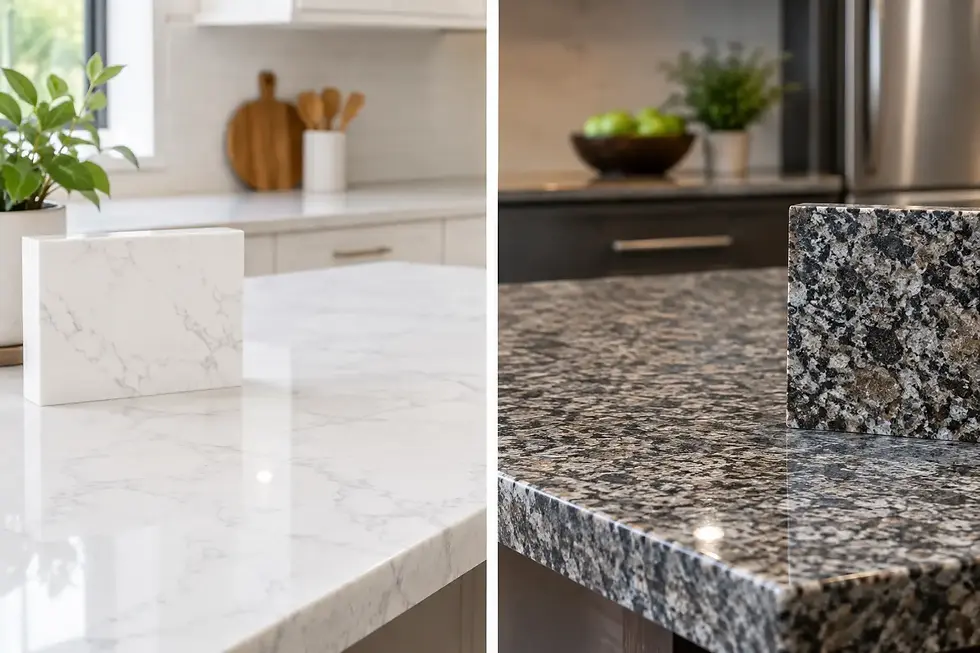
Countertops can influence the cabinet decision more than many homeowners realize. If existing countertops are being removed, it may be a convenient time to evaluate whether cabinet heights, widths, and appliance openings still make sense. New stone or solid-surface countertops should be measured after cabinets are finalized, whether those cabinets are refaced or newly installed.
Layout changes require even more planning. Moving plumbing or gas lines, adding circuits for appliances, or changing ventilation can increase the scope beyond cabinetry. These are not reasons to avoid a needed kitchen improvement. They are reasons to coordinate the work from the start, with a realistic schedule and clear responsibility for each trade.
For landlords and property owners preparing a rental, refacing may provide a durable visual update when the layout is serviceable and turnover time matters. For an owner-occupied home undergoing a long-term remodel, cabinet replacement may deliver better storage, improved workflow, and a more cohesive result.
Choose the Scope That Solves the Real Problem
The right cabinet decision should support the way the kitchen will be used after the work is complete. Refacing is a practical solution when the cabinet structure and layout are sound. Replacement is the better path when construction quality, storage, or room function needs to improve.
With 23 years of Bay Area construction experience, Pro-Construction approaches kitchen work by evaluating the full condition of the space, not just the finish on the cabinet doors. A clear plan at the beginning helps homeowners avoid surprises and invest in improvements that hold up over time.
Whether the right answer is refacing or replacement, the most useful next step is a careful on-site assessment. Good cabinetry should do more than make the kitchen look newer - it should support the daily work of the home for years to come.


Comments